Captured and Safely Home
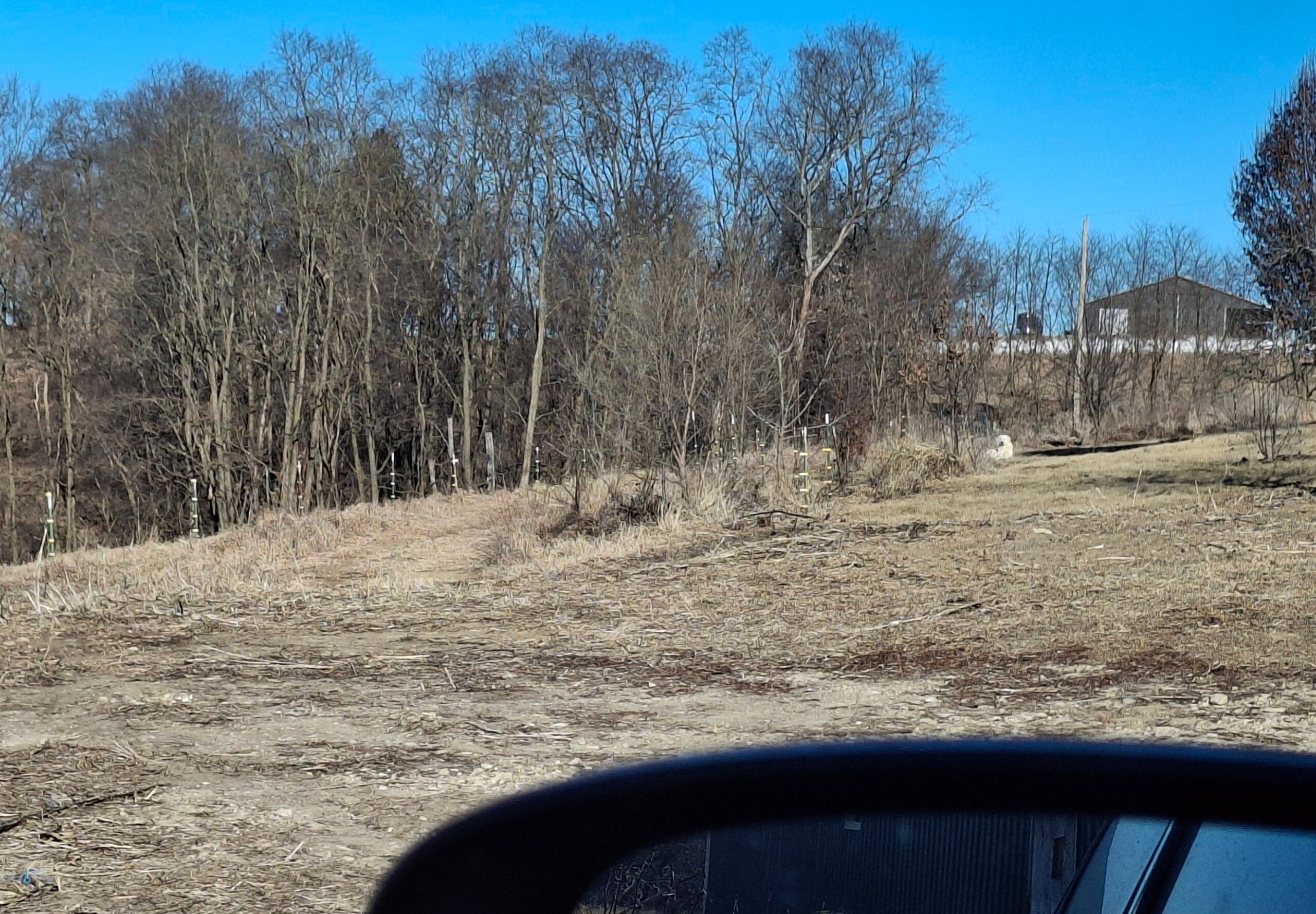
How would you feel if you were suddenly stranded in a frozen wilderness or a dangerous urban jungle? No shelter, no guaranteed food, and every shadow contains a threat. For weeks or months, you have been in survival mode. Your brain has rewired itself to find water, avoid predators, and stay invisible. Your heart races at every snap of a twig. You are exhausted, dirty, and your nervous system is frayed to the breaking point.
Then, suddenly, you are caught.
You are brought into a house. Maybe it’s a house you remember from a “before” life, or maybe it’s a total mystery. Either way, the “wild” is still inside you. You don’t know if the walls are a sanctuary or a trap. You don’t know if the people reaching for you are helping or hunting.
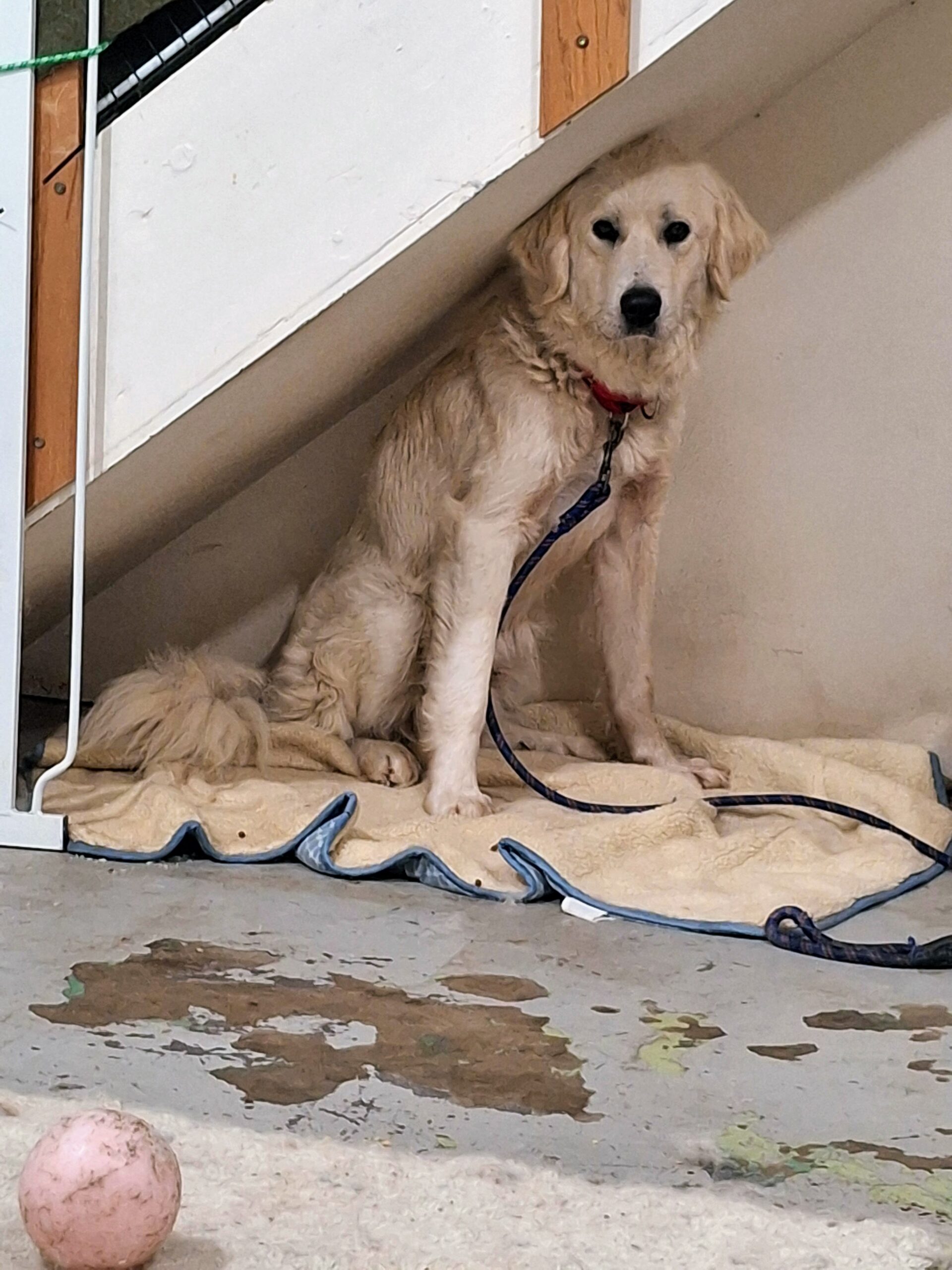
This is exactly how a dog feels after being lost and living in survival mode. Whether they are back home or in a new place, they aren’t “settled” the moment they cross the threshold. The dog is still hyper-vigilant. They are waiting for the sky to fall again. Recently captured dogs need time to remember how to be a pet and forget how to be a survivor.
The first 2-3 weeks after being captured a dog needs time to decompress and adjust to living in a home and allow the dog to move out of survival mode. Give them that time. Let the dog observe us from a safety zone. Understand a dog coming out of the wild might “shut down” or act in ways that seem strange to us. They aren’t being difficult; they are decompressing from a trauma.
The Two-Week Decompression Time (The “Survivor” Protocol)
For a dog that has been in survival mode, decompression isn’t just a suggestion—it’s a life raft. Their adrenaline levels are sky-high and can take weeks to return to normal. They need to realize that they no longer have to fight for every meal or hide to stay alive.

I don’t know about you, but if I had just spent months lost in the woods, I wouldn’t want to go to a loud party the day I got back. My preference would be a quiet room, a soft bed, and to be left alone until my heart stopped hammering. No strangers—or even familiar faces—crowding my space. I want to watch from the shadows until I knew I was truly safe.
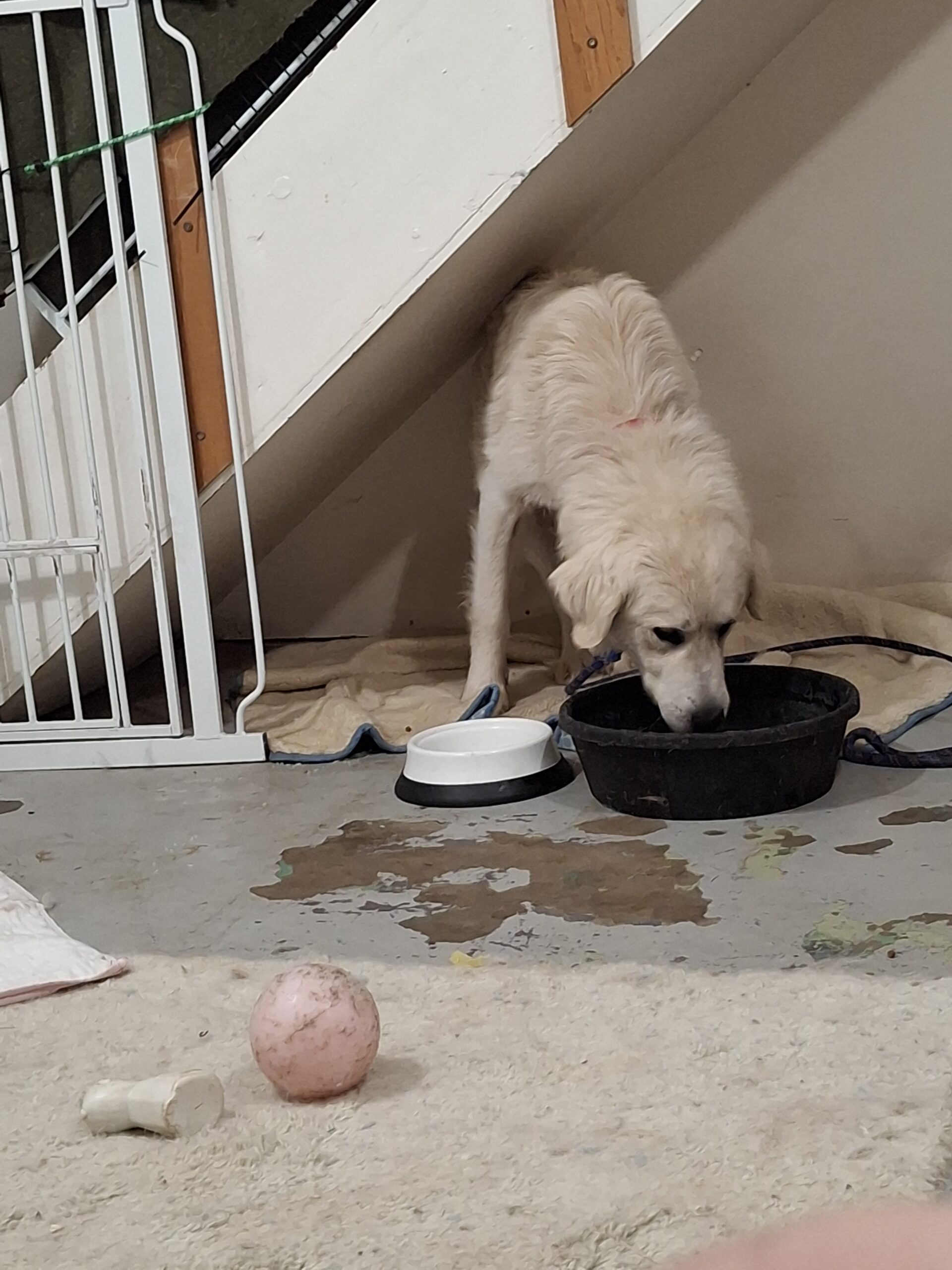
The Decompression Area
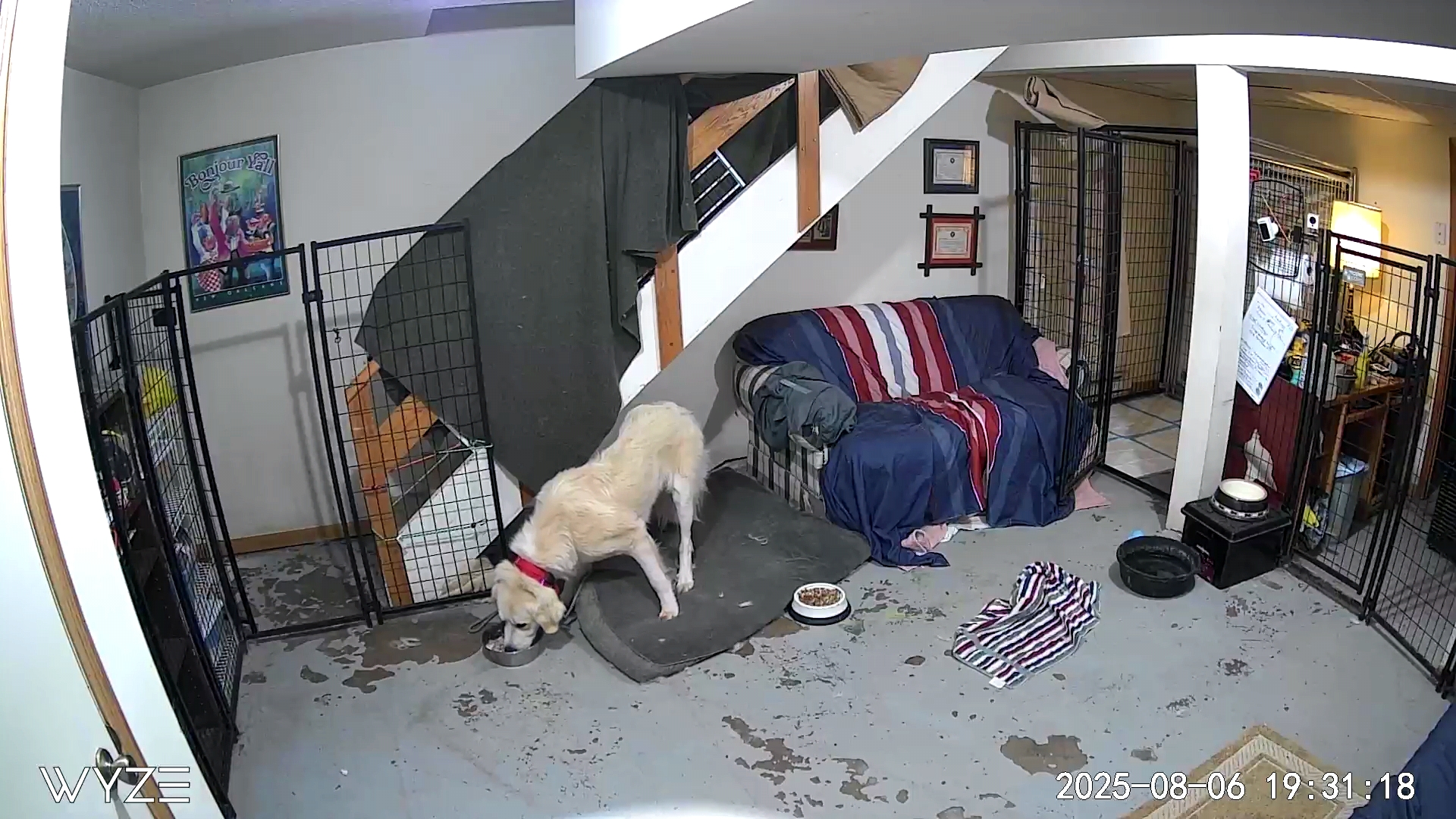
- The “Safety” Leash: Keep a light leash (a “drag line”) attached to the dog’s collar or harness. This allows you to guide them without the “threat” of reaching over their head or grabbing their collar, which can be terrifying to a dog in survival mode. Respect their personal space—for a traumatized dog, that safety zone can be 10 to 12 feet.
- The Den: Provide a crate with the door left open in a quiet corner. To a survivor, a “den” with a cover (like a sheet) feels like a hiding spot from predators.
- Strategic Placement: Put the den in a spot where the dog can see you but isn’t “trapped” in the middle of a high-traffic area. They need to observe the “tribe” without feeling like the center of attention.
The Survivor’s Routine
Keep life boring. Predictability is the cure for survival-mode anxiety.
- Outside to potty (on a leash!)
- Eat (in peace)
- Time to observe the household
- Quiet rest
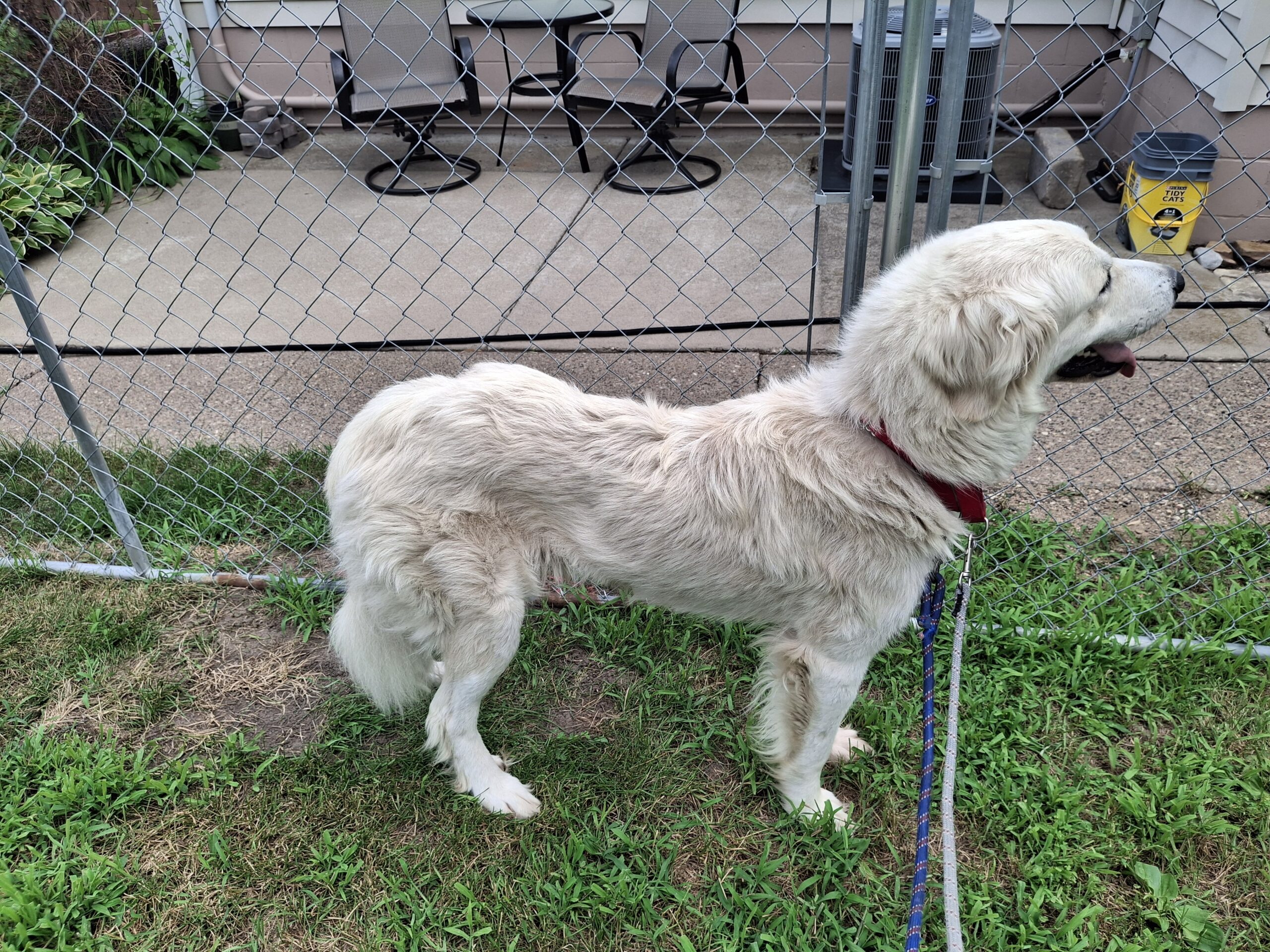
ALWAYS on a Leash (The Flight Risk)
This is the most critical rule for a dog that has been lost. Their instinct, at the first loud noise or scary moment, is to run. Even if you have a 6ft fence, a dog in survival mode can scale it or find a gap you didn’t know existed in seconds.
Slow is Fast
When it comes to a dog that has endured the trauma of being lost, slow is fast. If you try to rush the “happy homecoming” with hugs, parties, and playdates, you might trigger a setback that takes months to fix.
Watch their body language. If they are tucked, shaking, or staring blankly, they aren’t ready. Give them the gift of silence and space. They will find their way back to being a “dog” again—they just have to realize the “wolf” life is finally over.